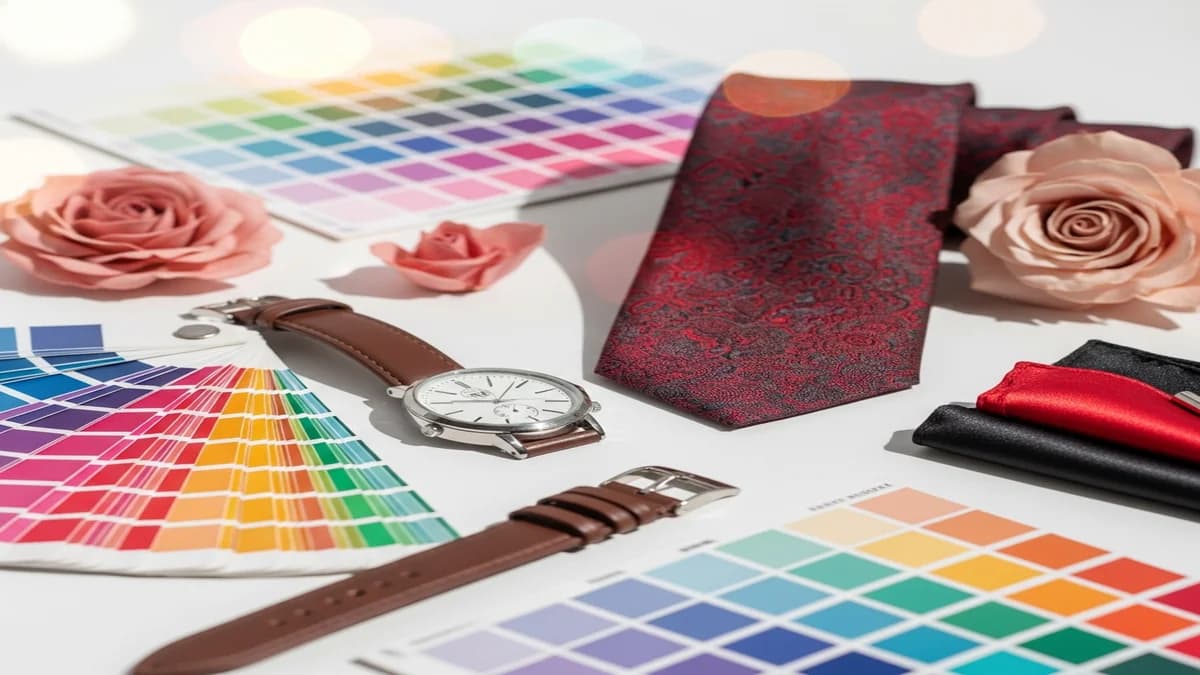
Color Analysis for Men: Find Your Best Colors for Clothing and Grooming
A friend of mine spent years wearing cool grey suits because they were "professional." He looked fine — nothing wrong, nothing remarkable. Then a stylist told him he was an Autumn and should try warm charcoal and olive instead. The first time he wore a warm brown blazer over a cream shirt, three people at work asked if he had done something different. He had not changed his haircut, his fitness, or anything else. He had just put on a color that worked with his skin instead of ignoring it.
Color analysis for men works exactly the same way it works for women — the science of color harmony does not care about gender. But most men's style guides skip this topic entirely, which means a lot of guys are defaulting to black, navy, and grey without knowing whether those are actually their best options.
This guide translates seasonal color analysis into practical, no-nonsense advice for men's clothing, suits, grooming, and accessories. No theory overload. Just what works, what does not, and why.
Want the quick version? Take our free color season test — it works for men and women alike.
Why Color Analysis Matters for Men
Here is the practical case: you have probably noticed that certain shirts get you more compliments than others, or that some suit colors make you look sharp while others feel off. That is color harmony at work.
When you wear colors that complement your natural coloring (skin tone, hair color, eye color), the effect is subtle but powerful:
- Your skin looks healthier and more even
- Your eye color appears more vivid
- You look more awake and energized
- The overall impression is "this guy has his act together"
When colors clash with your natural coloring:
- Your skin can look sallow, ruddy, or washed out
- Facial imperfections become more visible
- You can appear tired or less healthy than you are
- The impression is "something is off" even if people cannot pinpoint why
Quick Undertone Assessment for Men
Step 1: Determine Warm vs Cool
Vein test: Look at the veins on your inner wrist in natural light.
- Green veins = warm undertone
- Blue/purple veins = cool undertone
- Mix = neutral
The sunburn test: How does your skin react to sun exposure?
- Tans easily to golden/bronze = likely warm
- Burns easily or turns pink/red = likely cool
- Tans gradually without burning = could be either
Beard shadow test (if applicable): What color is your five o'clock shadow?
- Warm brown or reddish = warm undertone
- Cool grey or blue-black = cool undertone
Step 2: Determine Your Season
Warm + Light coloring (light hair, light eyes, fair-to-medium skin) = Spring Cool + Light coloring (ash hair, light eyes, fair-to-medium skin) = Summer Warm + Deep coloring (dark hair, warm eyes, medium-to-deep skin) = Autumn Cool + Deep coloring (dark hair, cool eyes, high contrast) = Winter
For a precise assessment, try GlowAI's color season analysis. Upload a photo and the AI determines your exact sub-season with specific color recommendations.
Men's Color Palette by Season
Spring Men (Warm + Light)
Your power colors:
- Warm navy (not cool navy)
- Camel and warm tan
- Warm light blue
- Salmon and warm coral
- Ivory and cream
- Warm medium grey
- Olive and warm green
Suit colors: Warm navy, camel, warm light grey, warm brown Shirt colors: Cream, warm light blue, soft peach, warm white Tie and accent colors: Coral, warm green, golden yellow, warm red Casual wear: Warm khaki, olive chinos, coral polo, cream henley
Avoid: Cool grey suits, black shirts, icy blue, stark white
Summer Men (Cool + Light)
Your power colors:
- Cool navy
- Soft blue-grey
- Dusty rose (yes, it works for men)
- Lavender and cool purple
- Cool taupe
- Powder blue
- Soft white
Suit colors: Cool navy, blue-grey, cool light grey, soft charcoal Shirt colors: Soft white, powder blue, light lavender, cool pink Tie and accent colors: Dusty blue, mauve, cool burgundy, teal Casual wear: Cool grey tee, blue chambray, navy polo, stone chinos
Avoid: Warm brown, camel, orange, bright yellow, warm beige
Autumn Men (Warm + Deep)
Your power colors:
- Rich brown and chocolate
- Olive and forest green
- Rust and burnt orange
- Warm burgundy
- Warm dark navy
- Mustard and dark gold
- Warm charcoal
Suit colors: Warm charcoal, rich brown, olive green, warm dark navy Shirt colors: Cream, warm blue, sage green, warm pink Tie and accent colors: Rust, forest green, mustard, warm burgundy Casual wear: Olive jacket, brown leather, rust flannel, warm denim
Avoid: Black suits (opt for warm charcoal), icy blue, cool grey, bright pink
Winter Men (Cool + Deep)
Your power colors:
- True black
- Pure white
- Cool navy
- Charcoal grey
- True red
- Emerald green
- Royal blue
Suit colors: Black, charcoal, cool navy, deep grey Shirt colors: Crisp white, icy blue, cool light grey Tie and accent colors: True red, deep purple, emerald, burgundy Casual wear: Black tee, crisp white shirt, charcoal sweater, dark denim
Avoid: Warm brown, camel, mustard, olive, warm beige
Building a Season-Appropriate Wardrobe
The Core Pieces Every Man Needs (In His Colors)
Suits (2-3):
- Your best dark neutral (navy or charcoal in your temperature)
- A lighter option (warm or cool grey depending on season)
- Optional: a seasonal accent (brown for autumn, black for winter)
Dress shirts (5-7):
- White (crisp for winter, soft for summer, cream for spring/autumn)
- Light blue (warm or cool version)
- A subtle pattern in your palette colors
- A bolder color for less formal settings
Casual tops (7-10): Build around your neutral base (warm grey/cream for warm seasons, cool grey/white for cool seasons) with accent pieces in your power colors.
Pants/Trousers (4-5): Khaki/chinos in your warm or cool neutral, dark denim, and dress trousers in your suit-adjacent colors.
The Shopping Hack
Before buying any clothing item, hold it up near your face in natural light. If your skin looks healthy and your eyes pop, it is in your palette. If your skin looks dull or your features fade, pass on it regardless of how much you like the color in isolation.
Grooming and Color Analysis
Beard and Facial Hair
Your facial hair color affects which clothing colors work best. A warm-toned beard benefits from warm colors near the face, while a cool-toned or grey beard works better with cool colors.
Grey beard specifically: If your beard has gone grey, you have likely shifted toward a cooler season than your youth. Cool colors (navy, charcoal, cool blue) tend to look more intentional and polished with grey facial hair than warm browns and beiges.
Skincare Products
Understanding your undertone can help with grooming products:
Tinted moisturizer or concealer: Choose warm-toned if you are a Spring/Autumn, cool-toned if you are a Summer/Winter.
Under-eye concealer: If you use one, match your undertone. A warm concealer on cool skin (or vice versa) will look ashy or orange.
Glasses Frames
Frame color follows the same principles:
Warm seasons: Warm tortoiseshell, warm brown, warm gold metal, warm olive Cool seasons: Cool black, cool grey, silver metal, cool tortoiseshell, blue-toned frames
Hair Color (If You Color It)
If you dye your hair or touch up grey:
Warm seasons: Stay in warm tones (warm brown, golden, warm dark) Cool seasons: Stay in cool tones (ash brown, cool dark, blue-black)
Choosing the wrong temperature in hair color is one of the most common and visible grooming mistakes. An autumn-toned man with ash-grey hair dye looks washed out, while a winter-toned man with warm golden highlights can look artificial.
Common Mistakes Men Make with Color
Mistake 1: Defaulting to all-black everything. Black is actually only a power color for Winter men. For Spring, Summer, and Autumn men, alternatives like warm charcoal, navy, or dark brown are more flattering and equally versatile.
Mistake 2: Wearing whatever is on sale without considering color. A great deal on a shirt in the wrong color is not actually a great deal if you never wear it because it makes you look off.
Mistake 3: Ignoring the shirt-suit-skin triangle. The shirt color between your suit and your face matters enormously. A white shirt works for most men, but the right shade of white (bright vs cream) depends on your season.
Mistake 4: Thinking color analysis is not masculine. Understanding which colors make you look your best is a strategic advantage. Athletes, executives, and public figures all work with color consultants. It is a tool, not a trend.
Mistake 5: Matching everything too precisely. Color harmony does not mean everything matches. It means your colors come from the same tonal family. A Spring man can mix coral, navy, and cream without them being identical.
Professional Settings
Interview Suits by Season
Spring: Warm navy suit, cream shirt, warm-toned tie Summer: Cool navy suit, soft white shirt, blue-grey tie Autumn: Dark warm charcoal suit, cream shirt, burgundy or olive tie Winter: Black or charcoal suit, crisp white shirt, deep red or navy tie
Business Casual by Season
Spring: Khaki chinos, warm blue oxford, brown loafers Summer: Grey trousers, powder blue shirt, navy blazer Autumn: Olive chinos, cream sweater, brown leather boots Winter: Dark grey trousers, white shirt, black leather shoes
The Quick Reference Card
Save this for your next shopping trip:
| Season | Best Neutrals | Best Accents | Metals | Avoid | |--------|--------------|-------------|--------|-------| | Spring | Warm navy, cream, camel | Coral, warm green, golden | Gold | Cool grey, black | | Summer | Cool navy, soft grey, soft white | Lavender, dusty blue, mauve | Silver | Orange, warm brown | | Autumn | Warm charcoal, brown, olive | Rust, forest green, mustard | Gold, bronze | Icy blue, black | | Winter | Black, charcoal, pure white | True red, emerald, royal blue | Silver, platinum | Warm brown, camel |
What to Do Next
- Figure out your season using the assessment above or GlowAI's color season test
- Go through your closet and notice which pieces fall in your palette — they are probably the ones you instinctively reach for
- For your next purchase, consciously choose colors from your seasonal palette
- Pay attention to the difference in how people respond to you
The effect is subtle but real. You will not transform overnight. But over time, as more of your wardrobe aligns with your season, the cumulative result is a consistently sharper, more polished appearance that people notice even if they cannot explain why.
For a deeper dive into the seasonal color system, see our full seasonal color analysis guide. If you are also thinking about your haircut, our guide on the best hairstyles for face shape covers how to match your cut to your proportions — the same principle of working with your natural features rather than against them.
And for understanding how color depth interacts with undertone, check our dark skin tone colors guide, which applies the same seasonal framework across all skin depths.
Frequently Asked Questions
What is color analysis for men?▼
Color analysis for men determines which clothing and grooming colors best complement your natural skin tone, hair color, and eye color. It categorizes you into one of four seasonal types — Spring, Summer, Autumn, or Winter — to guide wardrobe choices.
How do men find their color season?▼
Men can find their color season by examining their skin undertone (hold a white paper next to your face in natural light), hair color warmth, and eye color. Take GlowAI's free color analysis quiz for an instant AI assessment.
What colors should men with warm undertones wear?▼
Men with warm undertones look best in earthy and warm shades like olive green, camel, terracotta, warm navy, rust, and cream. Avoid cool blues, icy greys, and black, which can make warm skin appear sallow or tired.
What colors should men with cool undertones wear?▼
Men with cool undertones look best in shades like charcoal grey, navy, burgundy, forest green, and white. Avoid overly warm colors like orange, mustard, and golden brown, which can clash with cool-toned complexions.
Does color analysis work for men's grooming?▼
Yes, color analysis guides men's grooming choices including beard color, hair dye selection, eyeglass frame colors, and even cologne packaging aesthetics. Choosing harmonious tones across your look creates a more polished, cohesive appearance.
What are the best suit colors for each season?▼
Spring: tan and light grey. Summer: light blue and charcoal. Autumn: brown and olive. Winter: black and navy. Choosing suits in your seasonal palette ensures you look naturally polished without overdoing color coordination.
Can men wear any color if it fits well?▼
Fit matters, but color significantly impacts how healthy and sharp you look. Wearing your best colors near your face — in shirts, ties, and scarves — makes the biggest difference. Pants and shoes are more flexible with off-season colors.
Is color analysis the same for men and women?▼
The seasonal color analysis framework is the same for men and women. The difference is in application: men apply their palette to suits, shirts, ties, and grooming, while women apply it to a wider range of clothing and makeup options.
Discover Your Color Season
Find the colors that make you glow with our AI-powered color analysis.
Join 10,000+ beauty enthusiasts. Unsubscribe anytime.
Was this article helpful?
Continue Your Beauty Journey
Seasonal Color Analysis: The Only Guide You Actually Need (2026)
A real, no-fluff guide to seasonal color analysis. Learn how to find your color season, why it matters, and how to use it every day.
Warm Skin Tone Colors: The Best Shades for Clothing, Makeup & Hair (2026)
Discover the best colors for warm skin tones — clothing, makeup, nails, and hair. See exactly which warm-tone shades complement golden undertones and which to avoid.
Cool Skin Tone Colors: What to Wear & What to Avoid (2026 Guide)
The best colors for cool skin tones to wear — wardrobe, makeup, nails, and hair. Plus which shades to skip. Includes a free quiz to confirm your undertone.